+39 345 5592808

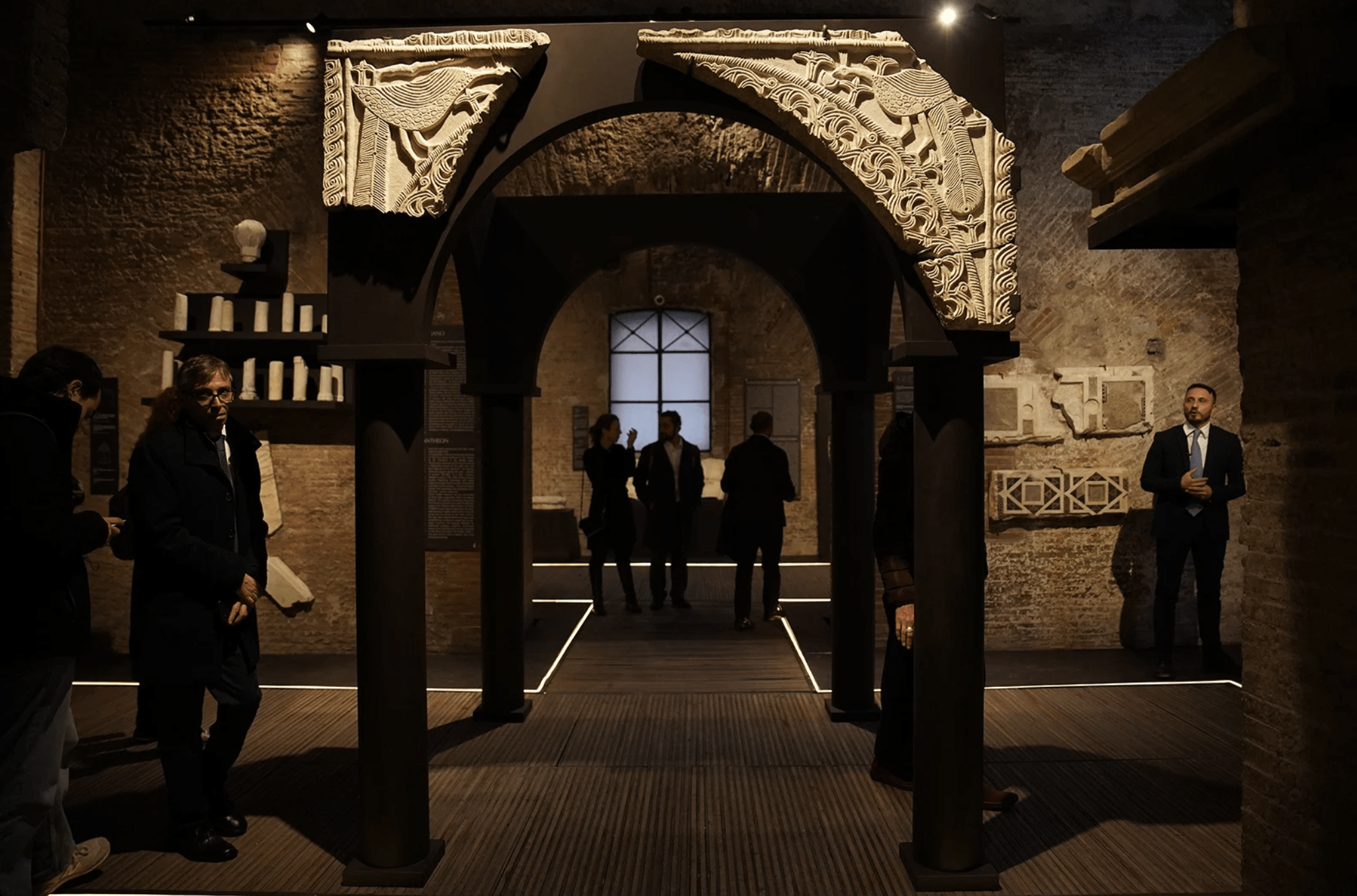
Did you know the Pantheon was hiding a monumental “neighbor” that remained unseen for centuries? Thanks to the new immersive visitor route, “Beyond the Pantheon,” the spaces of the Basilica of Neptune are finally open to the public, revealing a secret chapter in Rome’s history! The Basilica was built by Marcus Vipsanius Agrippa around 25 […]
Read more
Nowadays, few people know that the iconic beauty of the Pantheon, with its majestic pronaos and clean facade, was compromised for centuries. Looking at old prints reveals a surprising truth: the building once sported a pair of clumsy side bell towers, popularly known as the “Donkey’s Ears” (Orecchie d’Asino).These additions were not original but dated […]
Read more
Step into the Rotunda of the Pantheon, and you’ll immediately feel it: a sense of harmony, balance, and quiet awe. That’s no coincidence. Designed under Emperor Hadrian, the Pantheon’s central space was imagined as a perfect sphere—a hollow globe where heaven meets earth. A sphere of 43.3 meters in diameter, fitting snugly inside the massive […]
Read more
As you stand beneath the Pantheon, the best preserved Ancient Rome temple, you might never guess that part of its original grandeur now lives… in St. Peter’s Basilica. In 1625, during the reign of Pope Urban VIII of the powerful Barberini family, a large portion of the Pantheon’s original bronze was removed. Why? To create […]
Read more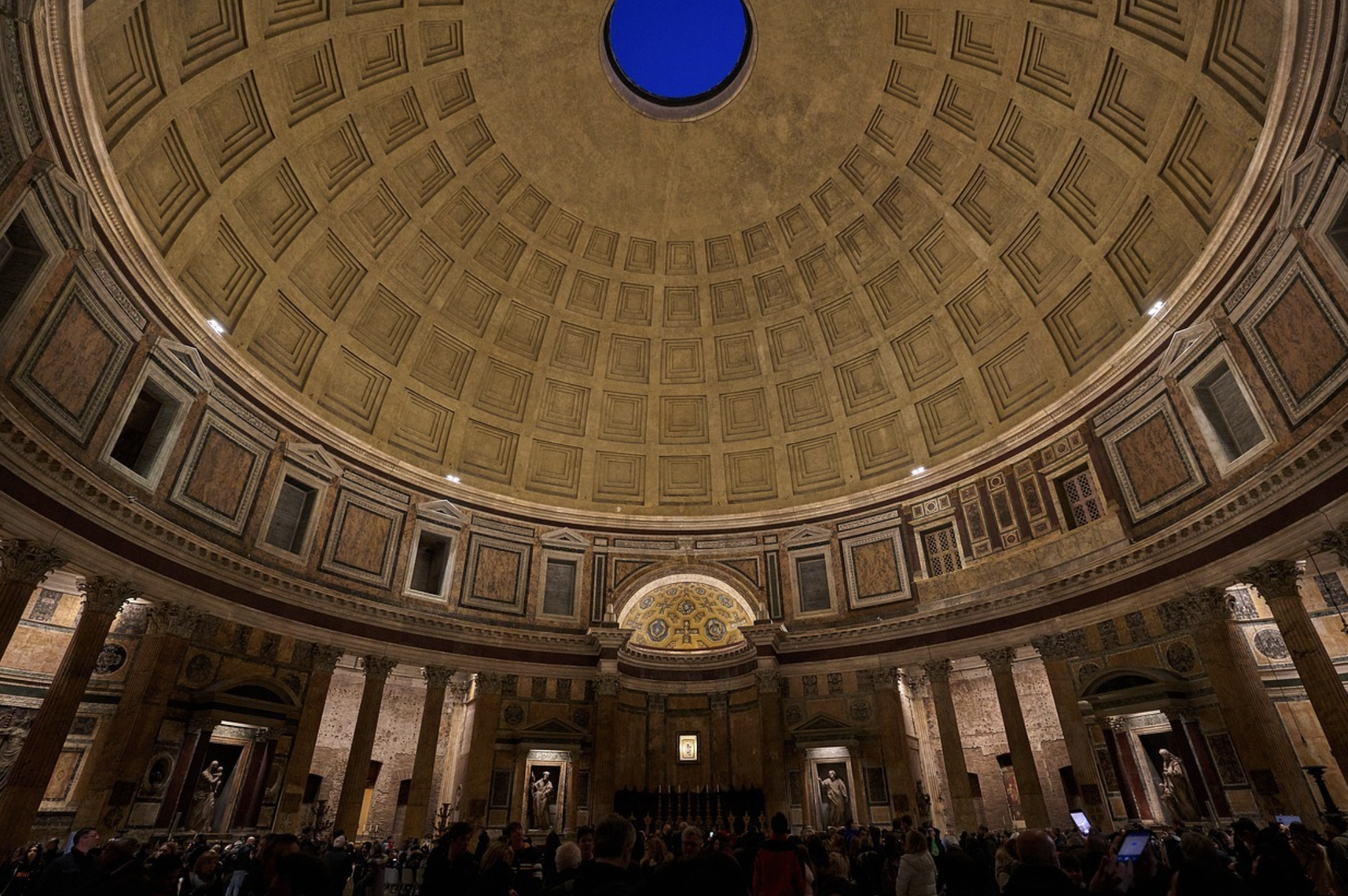
The Pantheon was so revered that, when it was transformed into a church in the 7th Century, it wasn’t dedicated to a single saint, but to all Christian martyrs. In 609 AD, Pope Boniface IV obtained permission from the Byzantine Emperor Phocas to convert the Pantheon into a Christian church. Instead of dedicating the building […]
Read more
The Pantheon, from the floor to the ceiling and walls, is a succession of circles, squares, rectangles, and triangles. Long story short, it is a true laboratory for geometry lovers. In particular, the floor is a mosaic of ancient marble from different parts of the Roman Empire that forms a design in which alternately inscribed […]
Read more
The Pantheon Fountain is back!After 7 months of maintenance work, with a specific procedure regarding cleaning, repair of any damaged or missing parts, and colour appearance operations, the fountain was reopened to the public with a special speech by Rome’s Major Roberto Gualtieri. This fountain was thought for the Jubilee of 1575: immediately after the […]
Read more
What does the inscription on the facade of the Pantheon mean? “M. Agrippa L. F. Cos. Tertium fecit” literally means that Marcus Agrippa, son of Lucius Agrippa, built the Pantheon during the year of his third consulate. This inscription came from the first Pantheon built in Rome: the first version of this landmark was, in […]
Read more
Have you ever wondered why inside the Pantheon doesn’t rain? As you know, the Oculus is open and has no glass on top of it. But, when you go to the Pantheon on rainy days, you can still avoid getting soaked. This is simply a matter of amazing Roman architecture: the Oculus, with its diameter […]
Read more
In the Pantheon, since 1878 rest Vittorio Emanuele II, the last king of the Kingdom of Sardinia and the first king of the Kingdom of Italy, when it was established in 1861. He is, as entitled on the grave, the Father of the Nation. However, according to popular belief, in 1821 he died in a […]
Read more